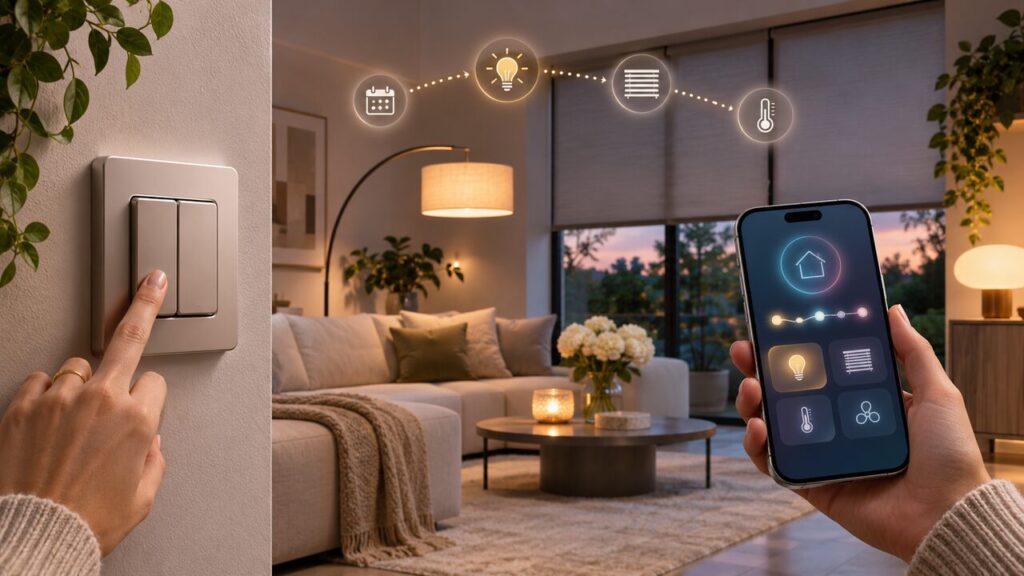
Automation should remove repetitive decisions without taking away needed human control. The choice is not all-or-nothing: manual switches, notifications and automated scenes can coexist in the same room.
Automate predictable low-risk actions
A hallway light activated at night or a reminder about an open window may be suitable. An event-based routine needs an explicit trigger and conditions so it does not surprise occupants.
Keep manual choices for uncertain conditions
A motion sensor may interpret a still person as an empty room. Avoid using uncertain occupancy readings to disable essential heating, lock an exit or control other safety-sensitive equipment. Give the household an accessible override.
Choose a recovery behavior
Document what the automation should do after internet or power is restored. If the controller loses track of device state, the system should avoid repeated or unsafe commands. Test the normal case and one realistic exception.
Practical checklist
- Automate clear tasks
- Use conditions thoughtfully
- Keep manual access
- Test after interruptions
Bottom line: Document what the automation should do after internet or power is restored.
Why a light should not be completely automatic
A motion sensor can help someone enter a dark hallway, but it may not detect a person sitting quietly. If the same sensor controls the only task lighting in a room, it can turn the light off unexpectedly. A manual switch or override prevents the automation from becoming a recurring annoyance.
How to confirm the setup works
In an entry area, a notification that the door is open can be helpful; automatically locking the door based solely on an uncertain presence signal is a different risk. Keep human decisions and manufacturer safety protections in charge of sensitive equipment. Automation should supplement safe controls, not bypass them.


