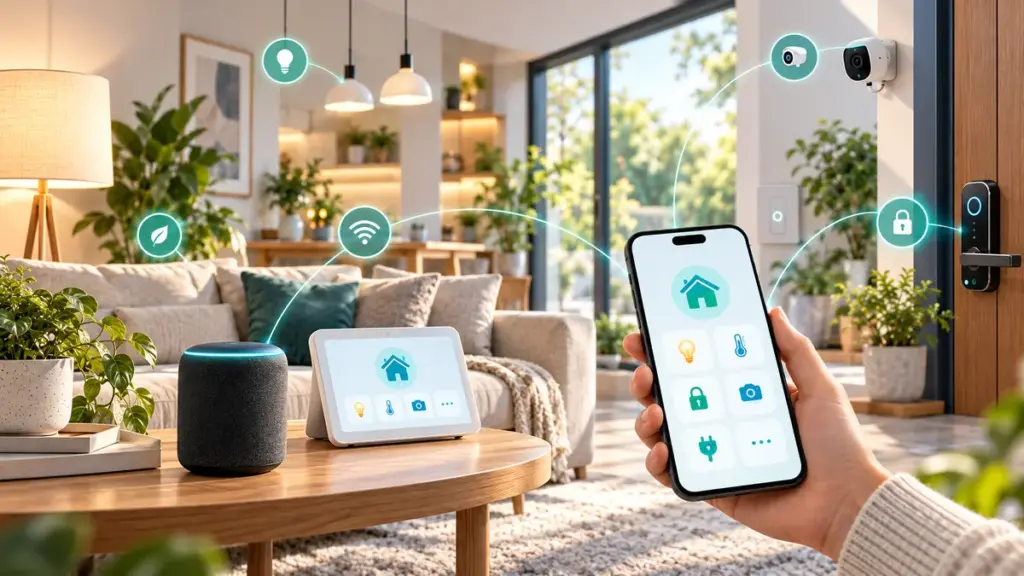
Many homeowners approach smart home upgrades by chasing the latest gadget rather than solving a specific household problem, leading to wasted money and a fragmented ecosystem. Without a structured decision-making process, it is easy to accumulate devices that overlap in function, lack interoperability, or fail to deliver meaningful daily value. This article provides a logical framework to move from reactive buying to strategic investing, ensuring every device added to your network serves a defined purpose.
For related guidance, see Smart Home Questions to Ask Before You Buy.
Define Core Problems Before Browsing Products
The first step is shifting focus from product features to household friction points. Walk through your daily routine and note specific annoyances: lights left on in empty rooms, difficulty managing temperature zones, anxiety over unlocked doors, or the hassle of manually watering the lawn. Categorize these issues into domains such as security, energy efficiency, convenience, and safety. A clearly defined problem statement—like “I need to verify the garage door is closed from bed”—acts as a filter that instantly disqualifies irrelevant devices and prevents feature creep.
Once problems are listed, rank them by frequency and impact. A daily annoyance that wastes energy or compromises security deserves a higher priority than a weekend convenience. This ranking creates a roadmap where the first purchase solves the most painful problem, delivering immediate return on investment and building confidence in the ecosystem. Avoid the temptation to solve low-priority issues simply because a device is on sale or heavily marketed.
Audit Existing Infrastructure and Compatibility
Before allocating budget, assess the technical foundation of your home. Check your Wi-Fi coverage, router capacity, and the presence of neutral wires in switch boxes, as these factors dictate which device categories are viable without costly electrical work. Identify the communication protocols—Zigbee, Z-Wave, Thread, Matter, or Wi-Fi—already supported by any existing hub or voice assistant. Choosing devices that natively speak your dominant protocol reduces latency, improves reliability, and eliminates the need for additional bridges.
Document the ecosystem lock-in level you are comfortable accepting. If you are heavily invested in a specific voice assistant, prioritize devices with native integration to maintain local control and routine simplicity. Conversely, if flexibility is paramount, lean toward Matter-certified or multi-protocol hardware. This audit prevents the common scenario of buying a highly rated sensor only to discover it requires a proprietary hub you do not own or cannot place effectively.
Establish a Tiered Budget with Total Cost of Ownership
Smart home budgeting often fails because it accounts only for the sticker price of the hardware. Create a tiered budget: Tier 1 for essential problem-solvers identified in step one, Tier 2 for high-value automations, and Tier 3 for experimental or comfort upgrades. For each candidate device, calculate the Total Cost of Ownership (TCO) by adding potential subscription fees for cloud storage or advanced features, the cost of professional installation if wiring is complex, and the expected energy draw over a year.
Factor in the “hidden” costs of ecosystem expansion, such as the need for a stronger mesh Wi-Fi system or a dedicated hub to handle increased device count. Allocate a contingency buffer of roughly 15 percent for accessories like mounting hardware, weatherproof enclosures, or specialized bulbs. This realistic financial picture prevents the project from stalling halfway through due to unforeseen expenses and helps you decide if a premium device with no subscription is actually cheaper over three years than a budget alternative with monthly fees.
Prioritize Local Control and Interoperability Standards
When comparing specific models within your budget tier, weigh local control capability heavily. Devices that execute automations locally—without relying on an internet round-trip—remain functional during outages and respond faster. Verify support for Matter or Thread, as these standards are designed to ensure cross-brand compatibility long-term, protecting your investment against platform abandonment. A device that works solely through a manufacturer’s cloud API carries a higher risk of obsolescence if the company pivots or shuts down servers.
Read technical specifications for offline functionality: can the smart lock be unlocked via keypad or physical key if the radio fails? Does the motion sensor trigger local lights without cloud latency? Prioritizing these architectural details over marketing claims like “AI-powered” ensures the system remains robust. This criterion often correlates with higher build quality and better privacy posture, as less data leaves the local network.
Implement a Phased Rollout Strategy
Resist the urge to automate the entire house in a single weekend. Deploy Tier 1 devices in a single zone or for a single use case first—such as automating the entryway lighting and lock. Live with the implementation for two weeks to debug connectivity issues, refine automation logic, and confirm the user interface works for all household members. This pilot phase reveals practical constraints, like switch placement confusion or voice command conflicts, that are invisible during planning.
Use lessons from the pilot to adjust the remaining roadmap. You may discover that a specific brand’s app is unintuitive, prompting a switch for subsequent purchases, or that your mesh network needs an additional node before adding basement sensors. A phased approach spreads financial outlay, reduces troubleshooting complexity, and allows firmware ecosystems to mature. It also prevents the “abandoned project” syndrome where half-installed devices create more frustration than the original manual workflow.
Measure Outcomes Against Original Problem Statements
After each phase stabilizes, evaluate success against the specific problems defined in the first step. If the goal was “reduce heating waste,” compare energy bills or runtime logs before and after the smart thermostat installation. If the goal was “eliminate key fumbling,” track how often the smart lock auto-unlock feature actually triggers successfully versus manual entry. Quantifiable metrics—even simple yes/no tracking—turn subjective satisfaction into objective data.
Schedule a quarterly review to reassess the priority list. Household needs shift: a nursery may need a humidity sensor, a new pet may require a specific camera view, or a change in work schedule may render a complex morning routine obsolete. Retire or repurpose devices that no longer serve a core problem. This continuous evaluation loop transforms a static collection of gadgets into a dynamic, maintained home system that consistently delivers value proportional to its cost and complexity.